

This book presents the first comprehensive account of the foreign policy of East Germany in Africa from the early 1950s to the present day. The author challenges the conventional notion that the GDR's role in Africa is solely that of a proxy for the USSR. Instead, as he convincingly argues, East German foreign policy in general and in Africa in particular, should be understood as a strategy both in pursuit of affiliation with the USSR and in search of international recognition and legitimacy.
Cambridge Studies in Russian, Soviet and Post-Soviet History Seria
Seria ta dostarcza szczegółowych analiz dotyczących epok rosyjskiej, sowieckiej i post-sowieckiej. Skupia się na wymiarach ekonomicznych, politycznych i społecznych tych złożonych historii. Każdy tom prezentuje oryginalne badania, które rzucają światło na kluczowe momenty i wydarzenia w regionie, oferując cenną wiedzę dla pasjonatów historii i nauk społecznych.

Powstanie Warszawskie
- 752 strony
- 27 godzin czytania
Praca ta jest próbą ustalenia: kiedy, jak i dlaczego autorzy Powstania zdecydowali się opanować Warszawę polskim wysiłkiem, przynajmniej na dwanaście godzin przed wejściem do niej Rosjan, chociaż wiedzieli, że stołecznym oddziałom Armii Krajowej brakowało potrzebnej ku temu broni i amunicji. Chodziło też o ustalanie, w jakim stopniu polityczne, ideologiczne i dyplomatyczne założenia i pociągnięcia władz RP na uchodźstwie i w kraju przyczyniły się do wybuchu Powstania. Praca ta nie zajmuje się przebiegiem samego Powstania, a czysto wojskowa działalność Armii Krajowej jest uwzględniona i omówiona o tyle, o ile wpływa na politykę walki w stolicy. Książka omawia główne dziedziny życia narodowego w okresie II wojny światowej, jak również przedstawia genezę i rozwój polskiego ruchu oporu. Bada też stosunki między obozem londyńskim a ruchem komunistycznym ze względu na to, że w końcowych latach wojny ugrupowania te wzajemnie ubiegały się o władzę w powojennej Polsce, co wpływało na polityczne decyzje Rządu RP na uchodźstwie.
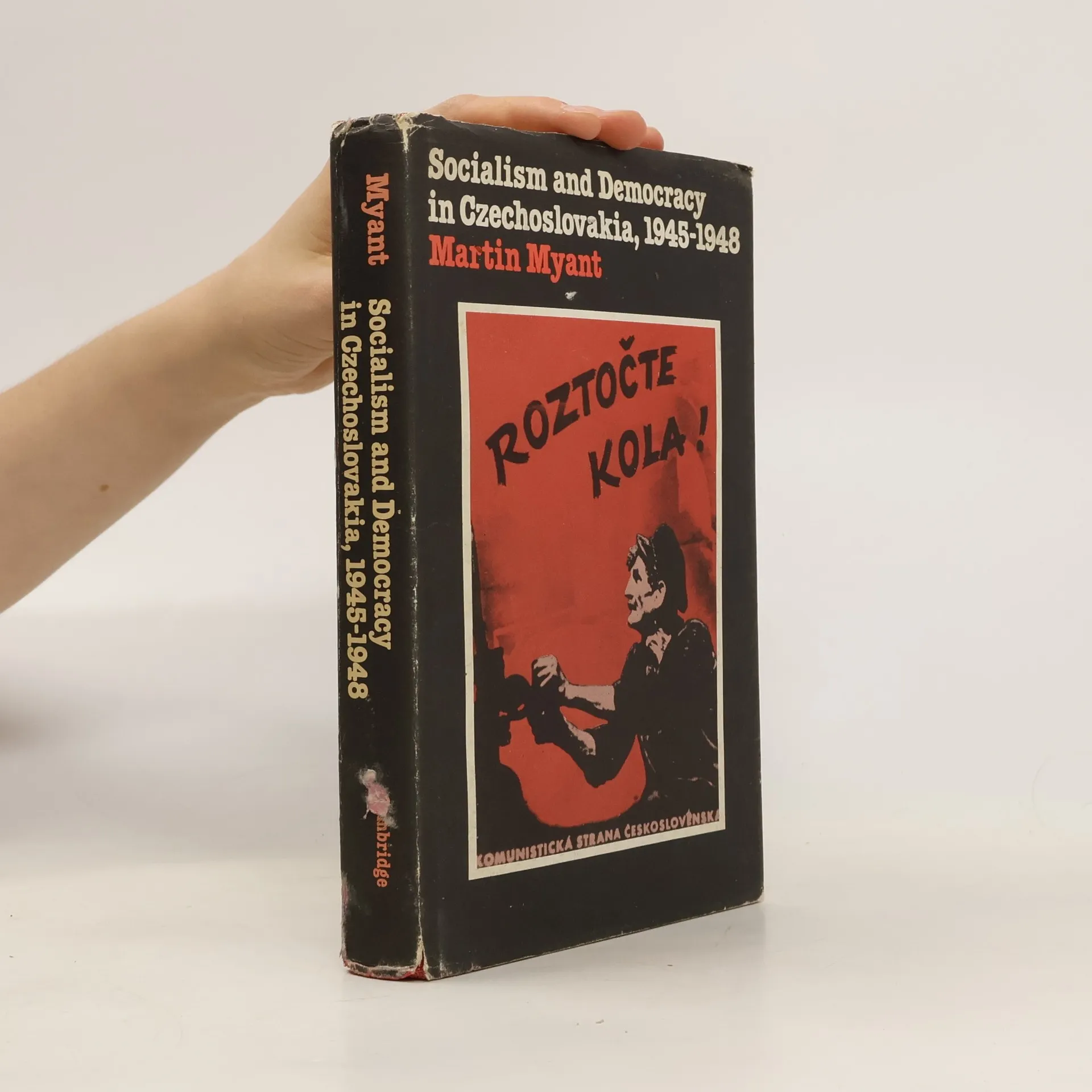
This book is about the political, social and economic changes in Czechoslovakia in the years 1945– 1948. In 1945 the 'national revolution' established the Communist Party as the dominant force within a coalition government. The leading Communists then evolved the idea of a specific Czechoslovak road to socialism that could bypass the 'dictatorship of the proletariat'. By analysing in detail the revolutionary events and the society that emerged from them, the book demonstrates that there was a real possibility of developing a distinct model of socialism containing a plurality of parties and a sizeable private sector. Such thinking, however, was effectively ended in February 1948, when the Communist Party established a monopoly of power. The fundamental causes of this change in the party's strategy are to be found, it is argued, in the international situation. The February events were of international significance as they confirmed the division of Europe into two blocs. The concluding chapter shows how important they were for the subsequent development of Czechoslovak society.
Accounting for War
Soviet Production, Employment, and the Defence Burden, 1940 1945
- 376 stron
- 14 godzin czytania
Focusing on the Soviet economy during wartime, the book analyzes statistical records to assess changes in GNP, employment, and the defense burden, alongside foreign aid's impact. By comparing the Soviet experience with other major powers, it highlights significant costs and capital losses due to the war, which adversely affected GNP long after 1945. Utilizing previously inaccessible official documents, the author offers fresh insights into the scale of the Soviet war effort and its enduring economic repercussions.
The book explores the evolving historical importance of detente, illustrating how non-superpower nations can transform challenging situations into advantageous opportunities. It delves into the strategies and actions taken by these states to navigate complex geopolitical landscapes, highlighting their resilience and adaptability in the face of adversity.
Stalin, Siberia and the Crisis of the New Economic Policy
- 280 stron
- 10 godzin czytania
Focusing on the regional dynamics of Siberia, the book explores how local conditions influenced Stalin's policies during the New Economic Policy (NEP) era. Dr. James Hughes delves into party-peasant relations, the kulak issue, and Stalin's patron-client networks, highlighting the regional effects of the 1927-28 grain crisis. His analysis reveals that the unique circumstances in Siberia significantly shaped Stalin's critical reassessment of the NEP, ultimately leading to the drastic measures of his "revolution from above" in 1929.
An Algebra of Soviet Power
Elite Circulation in the Belorussian Republic 1966 86
- 200 stron
- 7 godzin czytania
Utilizing vacancy chain analysis, Michael Urban presents a novel perspective on political elite studies in this work. By examining the dynamics of power within the Soviet system, the author explores how positions of authority are filled and the implications this has for understanding the political landscape. Urban's approach offers valuable insights into the mechanisms of governance and the interplay between individuals and the state, enriching the discourse on Soviet power structures.
Education and Social Mobility in the Soviet Union 1921 1934
- 368 stron
- 13 godzin czytania
Focusing on Soviet education policy from 1921 to 1934, this sequel delves into the evolution of educational practices and ideologies during a transformative period in Soviet history. It builds upon the insights of the author's earlier work, "Commissariat of Enlightenment," providing a detailed analysis of how education was shaped by political and social changes. The book highlights the challenges and innovations in the educational system, reflecting broader themes of state control and ideological influence in the pursuit of enlightenment.