

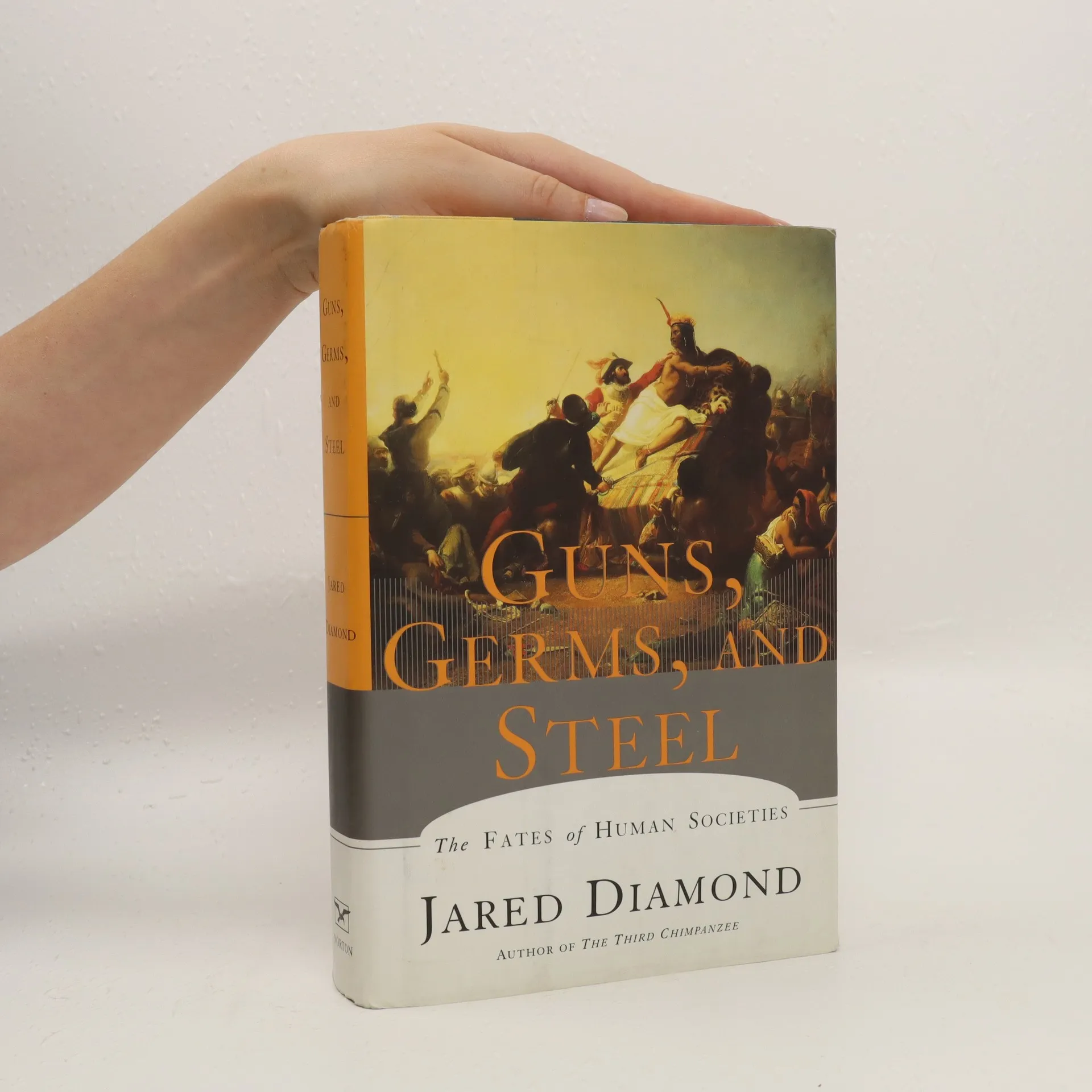
In this "artful, informative, and delightful (book)" ("New York Review of Books"), Diamond offers a convincing explanation of the way the modern world came to be and stunningly dismantles racially based theories of human history. Photos. Copyright © Libri GmbH. All rights reserved.
Civilizations Rise and Fall Seria
This series delves into the depths of human history, exploring the compelling question of why diverse societies evolved along disparate paths. It unravels the complex web of factors that shaped civilizations, from geographical and environmental influences to technological advancements and cultural exchanges. Readers embark on a journey across continents and centuries, gaining insight into the dynamics of rise and fall, and understanding the interconnectedness of human destiny.


Polecana kolejność czytania
Collapse
- 400 stron
- 14 godzin czytania
In Collapse, Jared Diamond investigates the fate of past human societies, and the lessons for our own future. What happened to the people who built the ruined temples of Angkor Wat, the long-abandonded statues of Easter Island, the crumbling Maya pyramids of the Yucatan? All saw their cultures collapse because of environmental crises. And it looks as if those crises were self-induced. As in his celebrated global best-seller Guns, Germs and Steel, Diamond brings together new evidence from a startling range of sources to tell a story with epic scope. And he lends it urgency for the modern world by probing the roots of decisions which allowed some societies to avoid ecological catastrophe, while others succumbed. How, he asks, can we learn to be survivors?
In his third book, Jared Diamond explores how successful nations recover from crises by adopting selective changes, a coping mechanism often associated with individuals. He compares the experiences of six countries that have faced significant upheavals, including Japan's forced opening by U.S. Commodore Perry, Finland's defense against the Soviet Union, and the turmoil in Chile and Indonesia, along with Germany and Austria's post-World War Two transformations. Drawing on his firsthand experiences and language skills in five of these nations, Diamond presents their histories and coping strategies, which include acknowledging responsibility, honest self-appraisal, and learning from other nations. He also examines whether the United States, Japan, and the world are effectively addressing their current crises and if lessons from the past can guide them. By integrating a psychological perspective with history, geography, biology, and anthropology, Diamond reveals the factors that influence how nations and individuals respond to significant challenges. The result is an epic yet deeply personal exploration of resilience and recovery in the face of adversity.