W serii „Wykłady w Collège de France” odkrywamy przełomowe myśli Michela Foucaulta, jednego z najważniejszych myślicieli XX wieku. Jego wykłady, odbywające się w Paryżu, zgłębiają złożoność struktur społecznych, władzy i wiedzy. Foucault zaprasza nas do refleksji nad wpływem tych zagadnień na współczesny świat, oferując unikalny wgląd w swój proces myślowy.
Foucault explores the concept of the will to know through a Nietzschean lens, examining the evolution of truth procedures, legal systems, and class struggles in ancient Greece. His analysis reveals how these elements interconnect to shape knowledge and power dynamics, offering a profound critique of historical narratives and their implications for contemporary thought. This lecture serves as a foundational exploration of the relationship between knowledge and societal structures.
These thirteen lectures on the 'punitive society,' delivered at the Collège de France in the first three months of 1973, examine the way in which the relations between justice and truth that govern modern penal law were forged, and question what links them to the emergence of a new punitive regime that still dominates contemporary society. Praise for Foucault's Lectures at the Collège de France Series “Ideas spark off nearly every page...The words may have been spoken in [the 1970s], but they seem as alive and relevant as if they had been written yesterday.”—Bookforum “Foucault is quite central to our sense of where we are...[He] is carrying out, in the noblest way, the promiscuous aim of true culture.”—The Nation “[Foucault] has an alert and sensitive mind that can ignore the familiar surfaces of established intellectual coded and ask new questions...[He] gives dramatic quality to the movement of culture.”—The New York Review of Books
In this addition to the College de France Lecture Series Michel Foucault
explores the birth of psychiatry, examining Western society's division of
'mad' and 'sane' and how medicine and law influenced these attitudes. This
seminal new work by a leading thinker of the modern age opens new vistas
within historical and philosophical study.
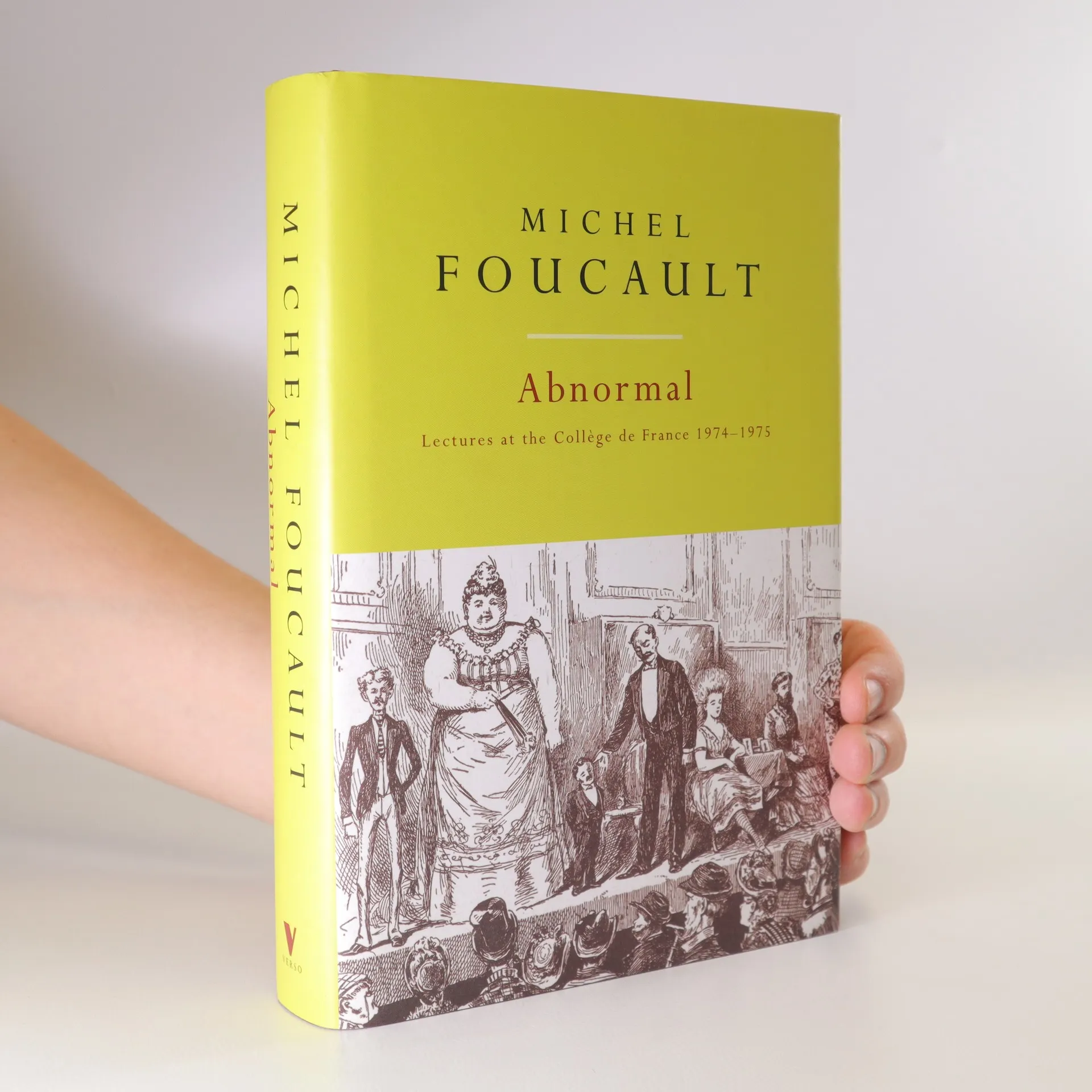
Michel Foucault remains one of the towering intellectual figures of the last half century. Michel Foucault's works on sexuality, madness, the prison and medicine are classics and his example continues to challenge and inspire. The philosopher gave public lectures at the College de France from 1971 until his death in 1984 - these lectures were seminal events and created benchmarks for contemporary critical inquiry. The lectures comprising "Abnormal" begin by examining the role of psychiatry in modern criminal justice and its method of categorizing individuals who "resemble their crime before they commit it." Michel Foucault shows how and why defining "abnormality" and "normality" were prerogatives of power in the 19th century and shaped the institutions. The College de France lectures add to our appreciation of the philosopher's thought and offer a unique window into his way of thinking
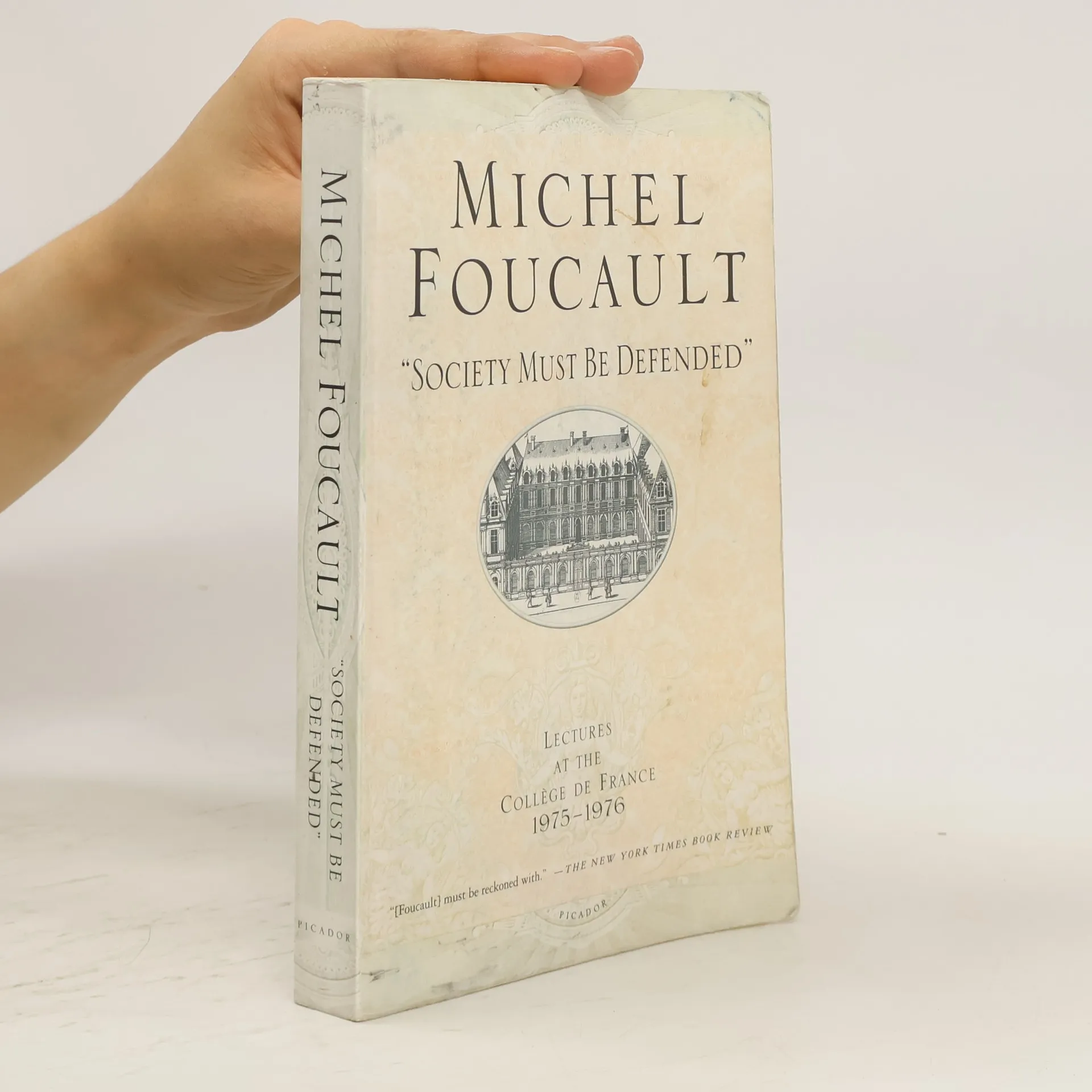
An examination of the relation between war and politics, by one of the twentieth century's most influential thinkers From 1971 until 1984 at the Collège de France, Michel Foucault gave a series of lectures ranging freely and conversationally over the range of his research. In Society Must Be Defended, Foucault deals with the emergence in the early seventeenth century of a new understanding of war as the permanent basis of all institutions of power, a hidden presence within society that could be deciphered by an historical analysis. Tracing this development, Foucault outlines the genealogy of power and knowledge that had become his dominant concern.
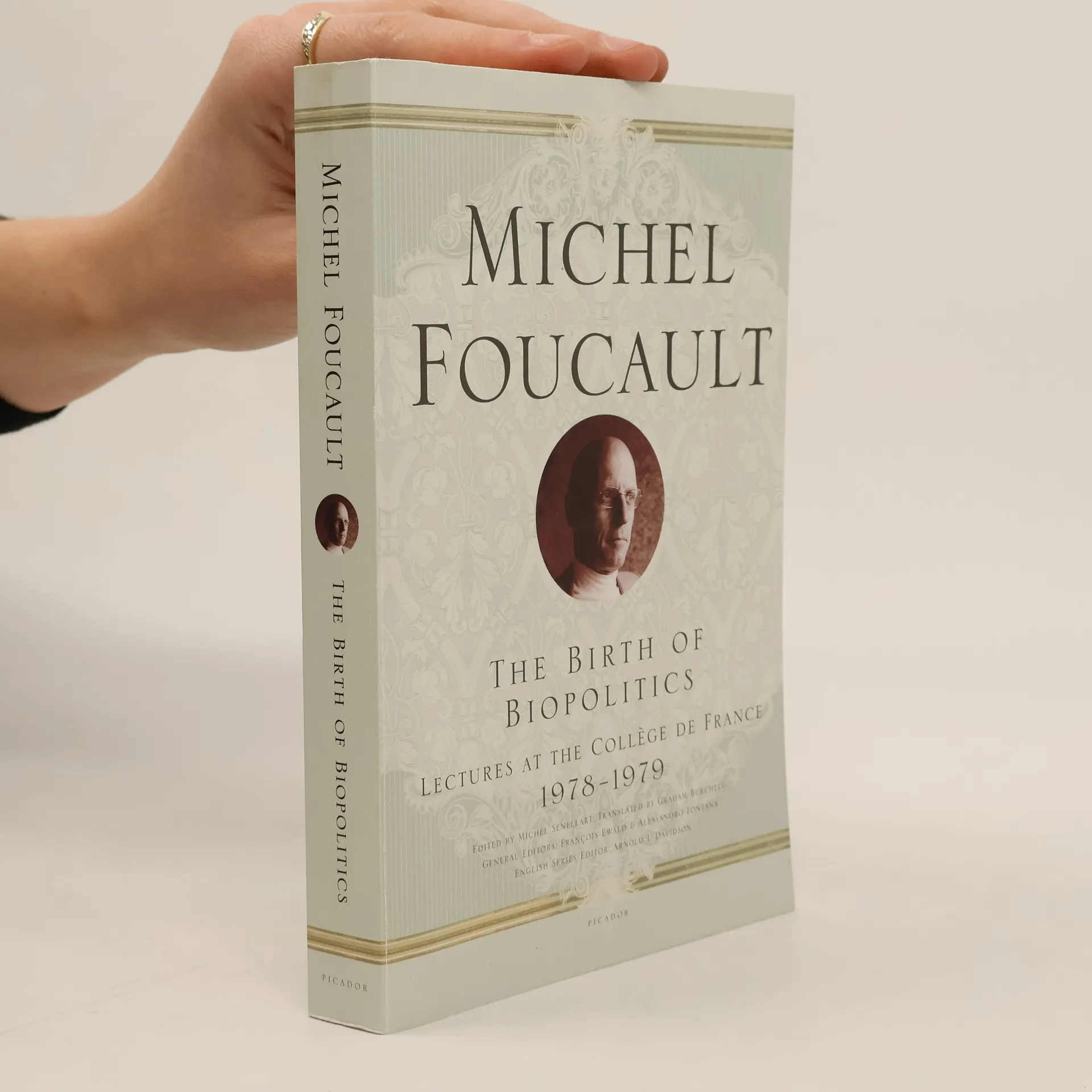
Marking a major development in Foucault's thinking, this book derives from the lecture course which he gave at the Collège de France between January and April, 1978. Taking as his starting point the notion of 'bio-power', introduced both in his 1976 course Society Must be Defended and in the first volume of his History of Sexuality, Foucault sets out to study the foundations of this new technology of power over population. Distinct from disciplinary techniques, the mechanisms of power are here finely entwined with technologies of security, and it is to the 18th century developments of these technologies with which the first chapters of the book are concerned. By the fourth lecture however Foucault's attention turns, focusing newly on a history of 'governmentality' from the first centuries of the Christian era through to the emergence of the modern nation state. As Michel Sennerlart explains in his afterword, the effect of this change of direction is to "shift the center of gravity of the lectures from the question of biopower to that of government, to such an extent that the latter almost entirely eclipses the former..." Consequently, in light of Foucault's later work, these lectures represent a radical turning point at which the transition to the problematic of the "government of self and others" begins.
Rządzenie żywymi to IX tom wykładów Michela Foucaulta w College de France i
zarazem tom szczególny. Wykłady w roku akademickim 1979–1980 Foucault
poświęcił bowiem teoretycznemu i historycznemu opracowaniu pojęcia „reżimu
prawdy' – pojęcia, które wyznaczało główną oś jego zainteresowań podczas
całego okresu pracy w College de France. Angażując problematykę reżimów prawdy
do analizowania technik i procedur prowadzenia ludzi, czyli rządzenia żywymi,
Foucault śledzi kształtowanie się metod badania sumienia w epoce
chrześcijańskiej. Od wczesnochrześcijańskich koncepcji wyznań i ich różnicy
względem praktyk starożytnych po średniowieczne reguły zakonne, Foucault
przygląda się, w jaki sposób praktyki wyznania grzechów i rachunku sumienia
wymuszały mówienie prawdy o sobie, przyznawania się do swoich błędów oraz
uznawania samego siebie – wobec Boga i ludzi – za grzesznika. Interesuje go
związek między mówieniem prawdy o sobie i angażowaniem ludzi w stosunki o
charakterze etycznym i politycznym – zobowiązywania się do podtrzymywania
swojego stanowiska czy też podporządkowywania się autorytetom. Badania
Foucaulta doprowadziły go do postawienia pytania, które nie straciło nic ze
swojej palącej aktualności: dlaczego na gruncie naszej kultury od rządzonych
wymaga się aktów posłuszeństwa i uległości polegających na mówieniu prawdy o
sobie.
Książka obejmuje wykłady Foucaulta z College de France z lat 1981/1982, koncentrując się na podmiocie i podmiotowości. Autor analizuje proces powstawania poczucia podmiotowości oraz samorealizacji, badając praktyki, które prowadzą do wytworzenia i kształtowania podmiotu. Foucault odnosi się do kultury sokratejskiej oraz rzymskiej kultury późnego antyku, badając myślicieli takich jak stoicy, Epiktet, Seneka i Marek Aureliusz. Analizowane zjawiska łączą doświadczenia jednostkowe z procesami społecznymi, ukazując ich wpływ na świat władzy, pracy, rzeczy i relacji międzyludzkich. Rozważania nad podmiotem stanowią istotny element wykładów Foucaulta, uzupełniając wiedzę o mniej podkreślanym aspekcie jego filozofii, w której objawia się jako sprawny psycholog. Michel Foucault (1926–1984) był francuskim filozofem i historykiem, kluczową postacią w powojennej Francji. Jako profesor College de France, jego wykłady wciąż wzbudzają zainteresowanie. Foucault z pietyzmem odnosił się do świadectw historycznych, badając relacje między władzą a językiem oraz wytwarzaniem wiedzy. Analizował zależności między dyskursami nauki, instytucjami społecznymi a praktykami społecznymi w różnych epokach.