

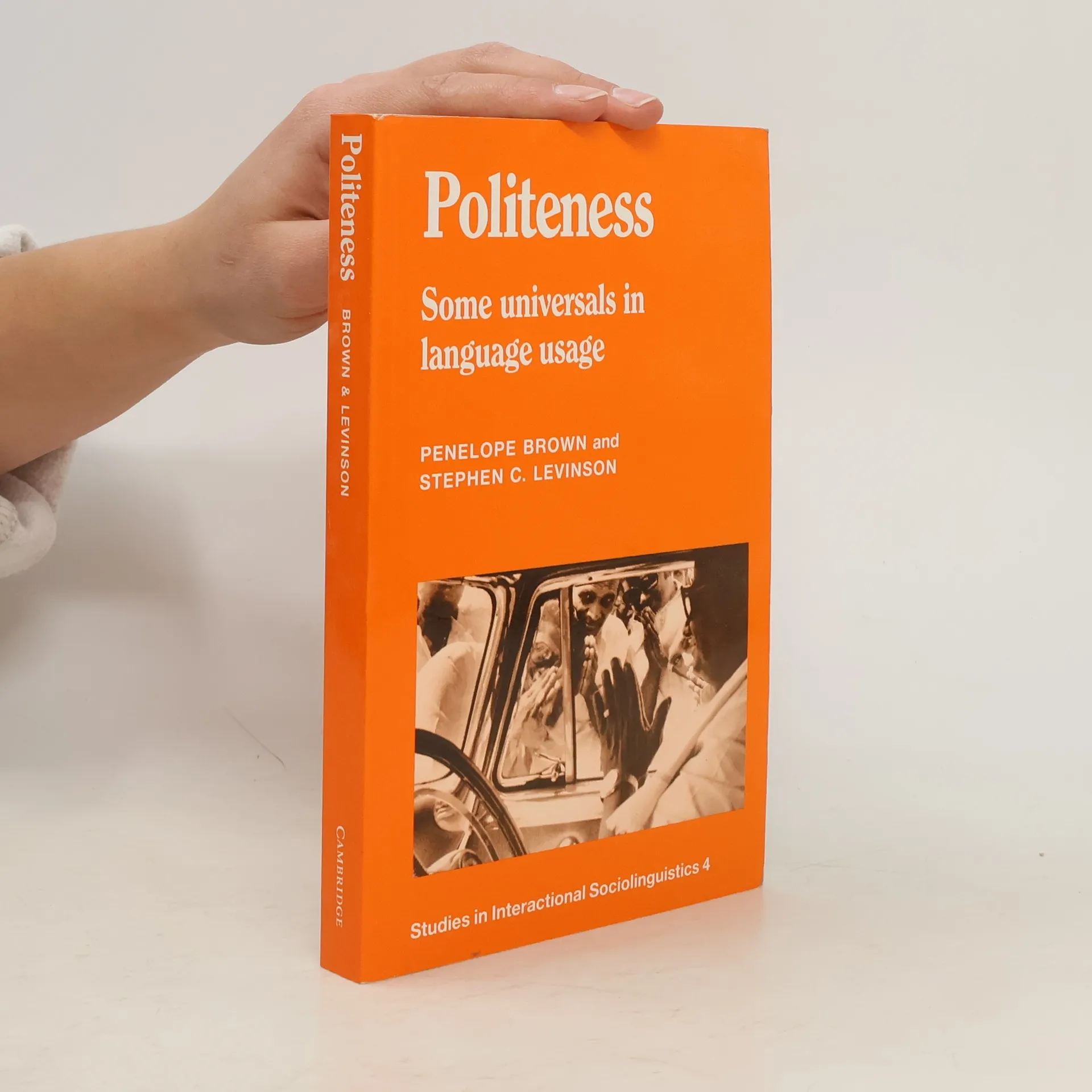
This study is about the principles for constructing polite speeches. The core of it first appeared in Questions and Politeness, edited by Esther N. Goody (now out of print). It is here reissued with a fresh introduction that surveys the considerable literature in linguistics, psychology and the social sciences that the original extended essay stimulated, and suggests distinct directions for research. The authors describe and account for some remarkable parallelisms in the linguistic construction of utterances with which people express themselves in different languages and cultures. A motive for these parallels is isolated and a universal model is constructed outlining the abstract principles underlying polite usages. This is based on the detailed study of three unrelated languages and cultures: the Tamil of South India, the Tzeltal spoken by Mayan Indians in Chiapas, Mexico, and the English of the USA and England. This volume will be of special interest to students in linguistic pragmatics, sociolinguistics, applied linguistics, anthropology, and the sociology and social psychology of interaction.
Stephen C. Levinson Kolejność książek (chronologicznie)

Pragmatyka
- 490 stron
- 18 godzin czytania
Kiedy należy traktować metaforę dosłownie, by dostrzec jej komiczny wydźwięk? Kiedy wyrażenie pochlebne staje się złośliwe? Jak sygnalizować, że rozmowa telefoniczna zmierza ku końcowi? Takie pytania bada pragmatyka, interdyscyplinarna dziedzina analizująca relacje między znakiem a użytkownikiem oraz procesy komunikacyjne. Lektura Levinsona jest dla tych, którzy fascynują się językiem w kontekście sytuacyjnym, kulturowym, psychologicznym i socjologicznym. Osoby zajmujące się literaturą znajdą tu uwagi na temat metafory i procesów metaforyzacji, socjologowie – rozważania o socjolingwistyce, a psychologowie – analizy związków pragmatyki z psycholingwistyką. Autor, z bogatym doświadczeniem antropologicznym, analizuje przykłady z różnych języków i kultur, w tym angielskiego, jawajskiego, japońskiego, koreańskiego, tamilskiego, madurskiego, tseltal, dyirbal czy guugu yimithirr. Książka Levinsona to kompleksowy podręcznik wprowadzający do pragmatyki, omawiający różne koncepcje oraz zależności wyrażeń od nadawcy, odbiorcy, czasu i miejsca wypowiedzi oraz statusu społecznego uczestników. Bada także mechanizmy sugerowania, aluzje, metafory, ironię oraz niejawne założenia towarzyszące wypowiedziom.