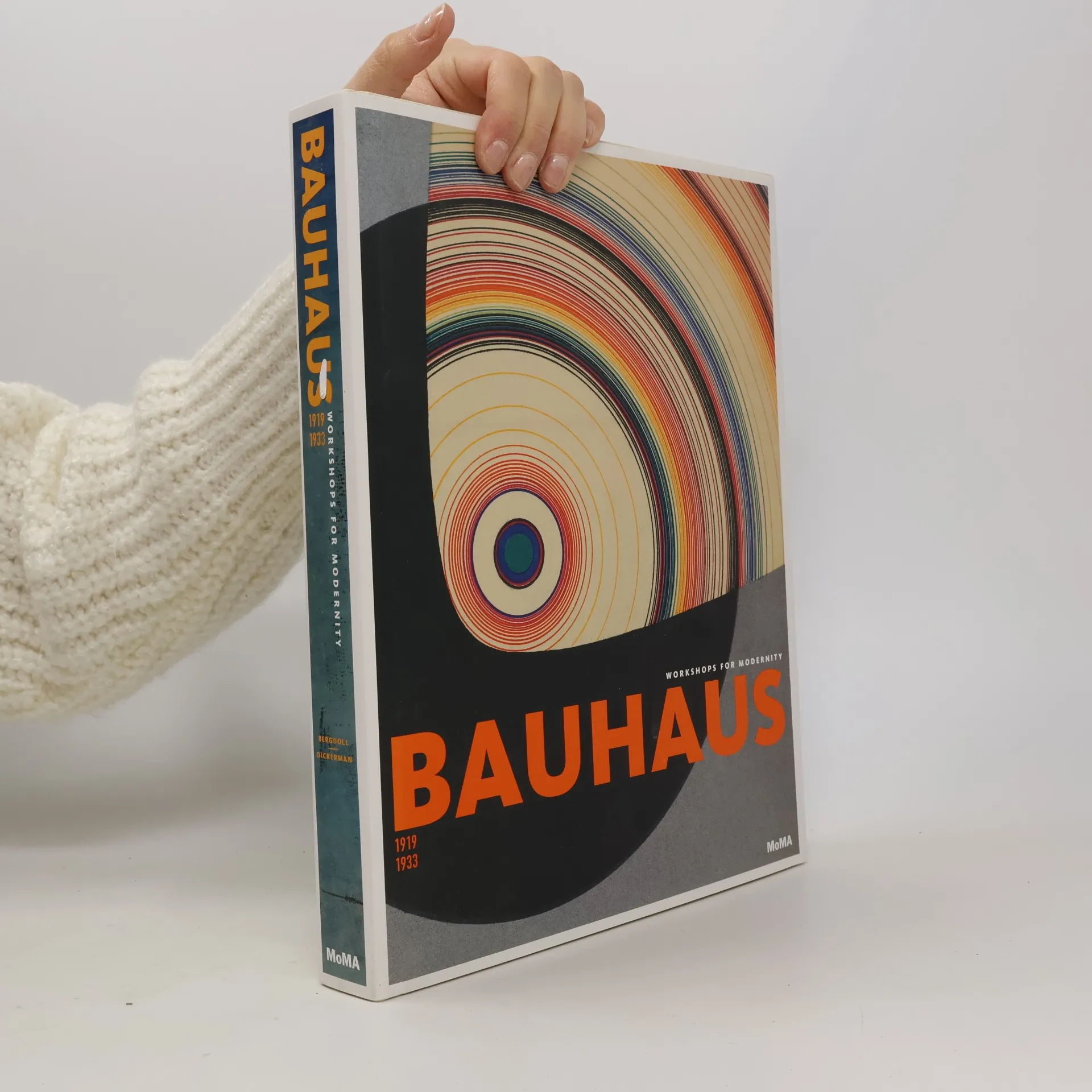
The Bauhaus, the school of art and design founded in Germany in 1919 and shut down by the Nazis in 1933, brought together artists, architects and designers--among them Anni and Josef Albers, Herbert Bayer, Marcel Breuer, Lyonel Feininger, Walter Gropius, Johannes Itten, Vasily Kandinsky, Paul Klee, László Moholy-Nagy, Lilly Reich, Oskar Schlemmer, Gunta Stölzl--in an extraordinary conversation on the nature of art in the industrial age. Aiming to rethink the form of modern life, the Bauhaus became the site of a dazzling array of experiments in the visual arts that have profoundly shaped the world today. Bauhaus 1919-1933: Workshops for Modernity , published to accompany a major multimedia exhibition, is The Museum of Modern Art's first comprehensive treatment of the subject since its famous Bauhaus exhibition of 1938, and offers a new generational perspective on the twentieth century's most influential experiment in artistic education. Organized in collaboration with the three major Bauhaus collections in Germany (the Bauhaus-Archiv Berlin, the Stiftung Bauhaus Dessau and the Klassic Stiftung Weimar), Bauhaus 1919-1933 examines the extraordinarily broad spectrum of the school's products, including industrial design, furniture, architecture, graphics, photography, textiles, ceramics, theater and costume design, painting and sculpture. Many of the objects discussed and illustrated here have rarely if ever been seen or published outside Germany. Featuring approximately 400 color plates, richly complemented by documentary images, Bauhaus 1919-1933 includes two overarching essays by the exhibition's curators, Barry Bergdoll and Leah Dickerman, that present new perspectives on the Bauhaus. Shorter essays by more than 20 leading scholars apply contemporary viewpoints to 30 key Bauhaus objects, and an illustrated narrative chronology provides a dynamic glimpse of the Bauhaus' lived history.