



Więcej o książce
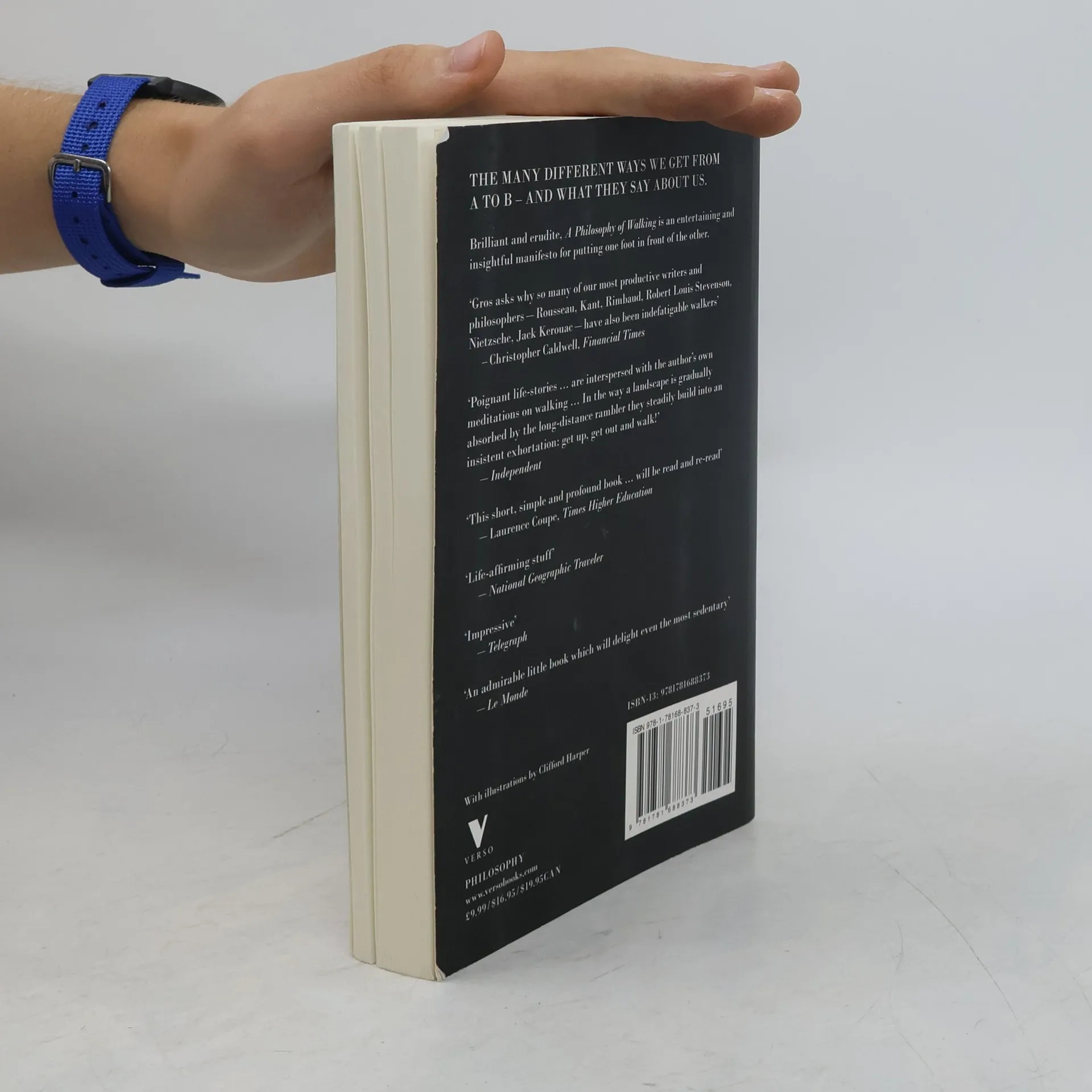
This philosophical ode to finding joy in simple things explores how walking has influenced history’s greatest thinkers—from Henry David Thoreau and John Muir to Gandhi and Nietzsche. “It is only ideas gained from walking that have any worth.” —Nietzsche In this French bestseller, leading thinker and philosopher Frédéric Gros charts the many different ways we get from A to B—the pilgrimage, the promenade, the protest march, the nature ramble—and reveals what they say about us. Gros draws attention to other thinkers who also saw walking as something central to their practice. On his travels he ponders Thoreau’s eager seclusion in Walden Woods; the reason Rimbaud walked in a fury, while Nerval rambled to cure his melancholy. He shows us how Rousseau walked in order to think, while Nietzsche wandered the mountainside to write. In contrast, Kant marched through his hometown every day, exactly at the same hour, to escape the compulsion of thought. Brilliant and erudite, A Philosophy of Walking is an entertaining and insightful manifesto for putting one foot in front of the other.




Zakup książki
A Philosophy of Walking, Frédéric Gros
- Język

- Rok wydania
- 2015
- Oprawa
- (miękka)
Metody płatności
Brakuje nam tutaj Twojej recenzji.
- Tytuł
- A Philosophy of Walking
- Język
- angielski
- Autorzy
- Frédéric Gros
- Wydawca
- Verso Books
- Rok wydania
- 2015
- Oprawa
- miękka
- ISBN10
- 1781688370
- ISBN13
- 9781781688373
- Seria
- Kategorie
- Tagi
- Przyroda, Podróże, Tematyka psychologiczna, Tematyka filozoficzna, Wędrowanie, Chodzenie, Aktywności fizyczne, Antropologia filozoficzna
- Oryginalna nazwa
- Marcher, une philosophie
- Ocena
- 3,4 z 5
- Opis
- This philosophical ode to finding joy in simple things explores how walking has influenced history’s greatest thinkers—from Henry David Thoreau and John Muir to Gandhi and Nietzsche. “It is only ideas gained from walking that have any worth.” —Nietzsche In this French bestseller, leading thinker and philosopher Frédéric Gros charts the many different ways we get from A to B—the pilgrimage, the promenade, the protest march, the nature ramble—and reveals what they say about us. Gros draws attention to other thinkers who also saw walking as something central to their practice. On his travels he ponders Thoreau’s eager seclusion in Walden Woods; the reason Rimbaud walked in a fury, while Nerval rambled to cure his melancholy. He shows us how Rousseau walked in order to think, while Nietzsche wandered the mountainside to write. In contrast, Kant marched through his hometown every day, exactly at the same hour, to escape the compulsion of thought. Brilliant and erudite, A Philosophy of Walking is an entertaining and insightful manifesto for putting one foot in front of the other.