

Parametry
Więcej o książce
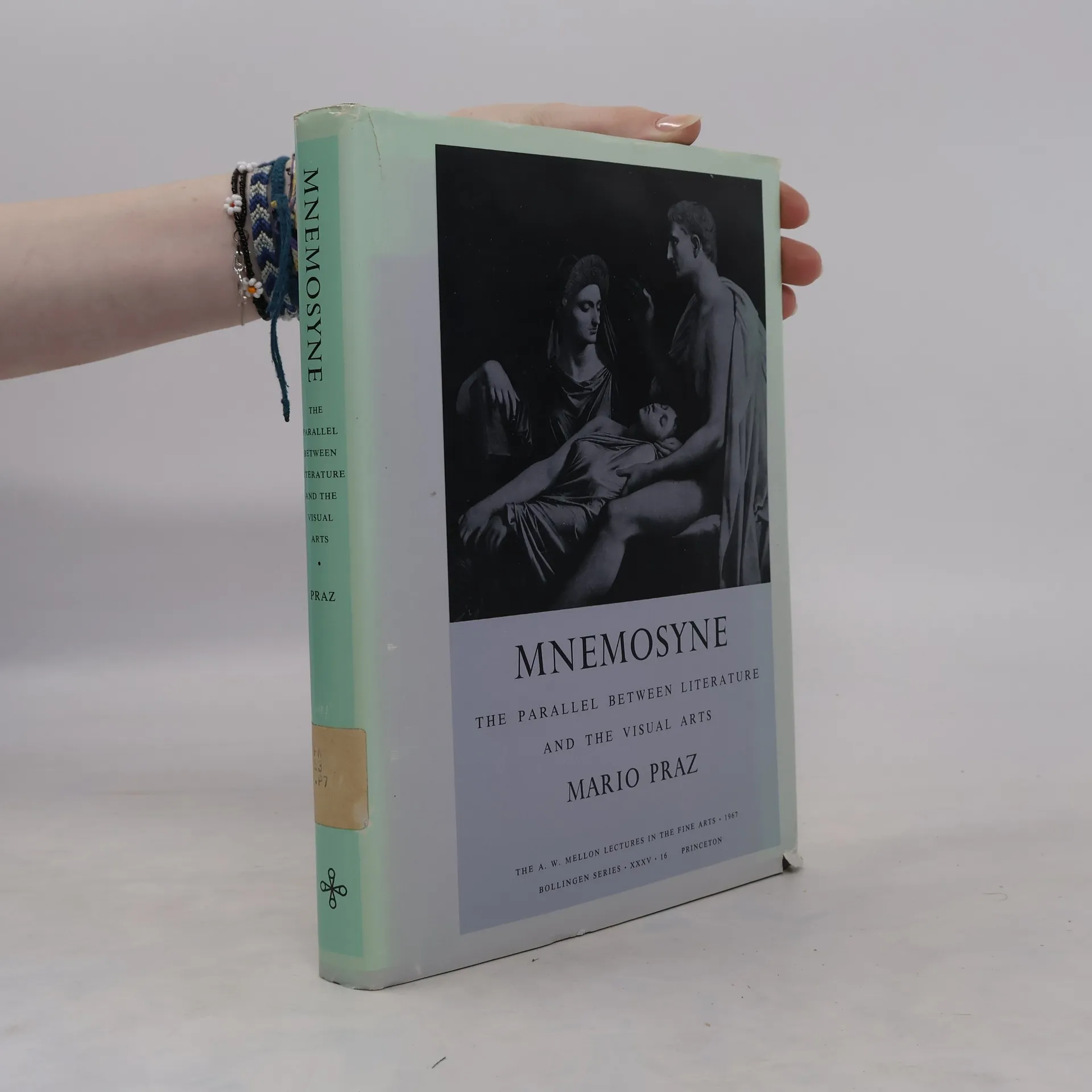
The classic study of the timeless relationship between literature and the visual arts In his search for a common link between literature and the visual arts, Mario Praz draws on the abundant evidence of mutual understanding and correspondence they have long shared. Praz explains that within literature, each epoch has “its peculiar handwriting or handwritings, which, if one could interpret them, would reveal a character, even a physical appearance,” and while these characteristics belong to the general style of a given period, the personality of the writer does not fail to pierce through. Praz contends that something similar occurs in art. He shows how the likeness between the arts within various periods of history can ultimately be traced to structural similarities that arise out of the characteristic way in which the people of a certain epoch see and memorize facts aesthetically. Mnemosyne, at once the goddess of memory and the mother of the muses, presides over this view of the arts. In illustrating her influence, Praz ranges widely through Western sources, providing an incomparable tour of the literary and pictorial arts.



Zakup książki
Mnemosyne, Mario Praz
- Język

- Rok wydania
- 1970
- Oprawa
- (twarda)
Metody płatności
Nikt jeszcze nie ocenił.
- Tytuł
- Mnemosyne
- Podtytuł
- The Parallel between Literature and the Visual Arts
- Język
- angielski
- Autorzy
- Mario Praz
- Wydawca
- Princeton University Press
- Rok wydania
- 1970
- Oprawa
- twarda
- Seria
- Kategorie
- Tagi
- Sztuka
- Opis
- The classic study of the timeless relationship between literature and the visual arts In his search for a common link between literature and the visual arts, Mario Praz draws on the abundant evidence of mutual understanding and correspondence they have long shared. Praz explains that within literature, each epoch has “its peculiar handwriting or handwritings, which, if one could interpret them, would reveal a character, even a physical appearance,” and while these characteristics belong to the general style of a given period, the personality of the writer does not fail to pierce through. Praz contends that something similar occurs in art. He shows how the likeness between the arts within various periods of history can ultimately be traced to structural similarities that arise out of the characteristic way in which the people of a certain epoch see and memorize facts aesthetically. Mnemosyne, at once the goddess of memory and the mother of the muses, presides over this view of the arts. In illustrating her influence, Praz ranges widely through Western sources, providing an incomparable tour of the literary and pictorial arts.