



Więcej o książce
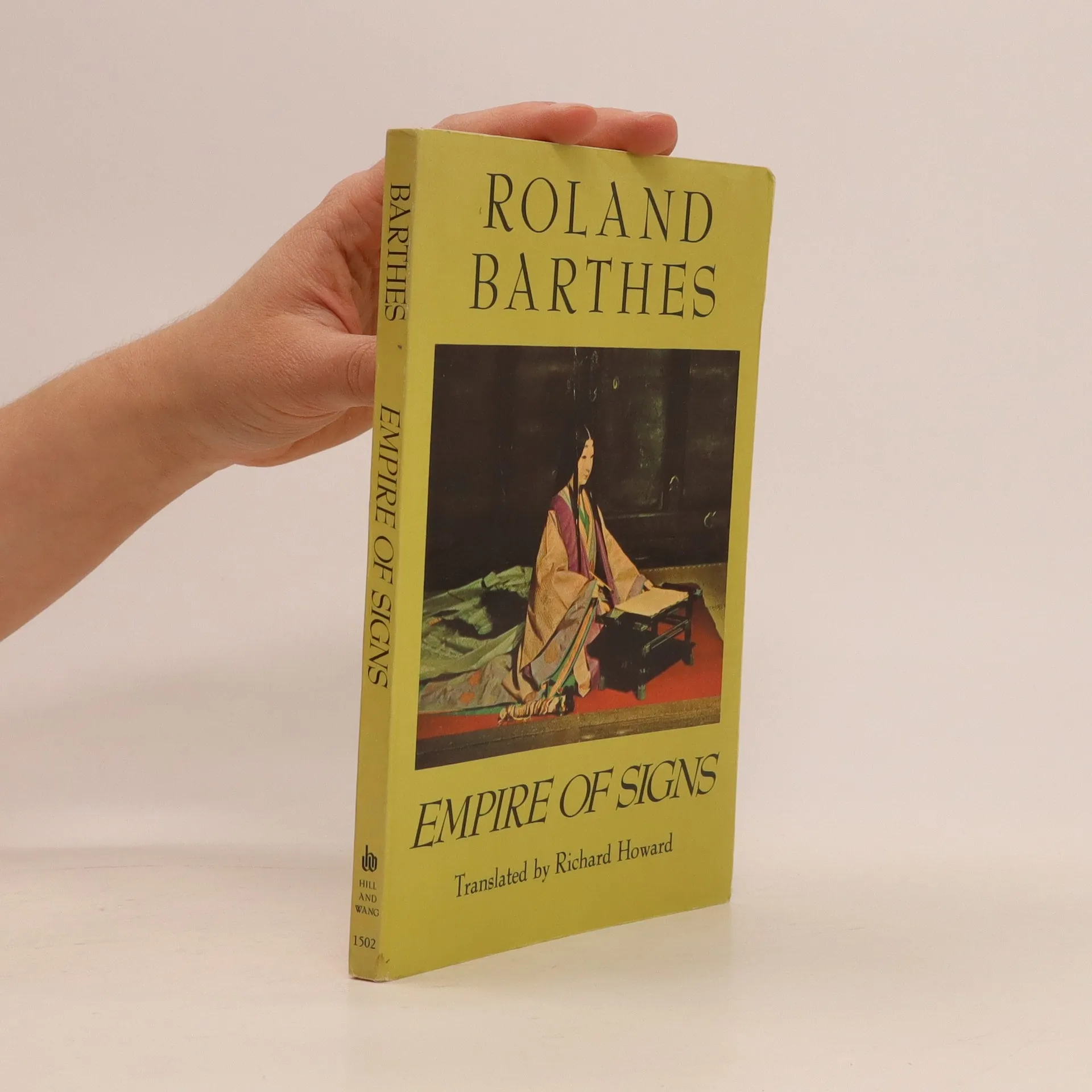
This anthology by Roland Barthes is a reflection on his travels to Japan in the 1960s. In twenty-six short chapters he writes about his encounters with symbols of Japanese culture as diverse as pachinko, train stations, chopsticks, food, physiognomy, poetry, and gift-wrapping. He muses elegantly on, and with affection for, a system "altogether detached from our own." For Barthes, the sign here does not signify, and so offers liberation from the West's endless creation of meaning. Tokyo, like all major cities, has a center--the Imperial Palace--but in this case it is empty, "both forbidden and indifferent ... inhabited by an emperor whom no one ever sees." This emptiness of the sign is pursued throughout the book, and offers a stimulating alternative line of thought about the ways in which cultures are structured.




Zakup książki
Empire of Signs, Roland Barthes
- Język

- Rok wydania
- 1983
- Oprawa
- (miękka)
Metody płatności
Brakuje nam tutaj Twojej recenzji.
- Tytuł
- Empire of Signs
- Język
- angielski
- Autorzy
- Roland Barthes
- Wydawca
- Hill & Wang
- Rok wydania
- 1983
- Oprawa
- miękka
- Seria
- Kategorie
- Tagi
- Tematyka filozoficzna, Sztuka, Nauka, Francja, Lingwistyka, Japonia, Komunikacja, Ogród, Kultura, Teorie naukowe, Grafika, Herbata, Tokio, Kultura japońska, Semiotyka
- Pierwsze wydanie
- 1970
- Oryginalna nazwa
- L'Empire des signes
- Ocena
- 3,9 z 5
- Opis
- This anthology by Roland Barthes is a reflection on his travels to Japan in the 1960s. In twenty-six short chapters he writes about his encounters with symbols of Japanese culture as diverse as pachinko, train stations, chopsticks, food, physiognomy, poetry, and gift-wrapping. He muses elegantly on, and with affection for, a system "altogether detached from our own." For Barthes, the sign here does not signify, and so offers liberation from the West's endless creation of meaning. Tokyo, like all major cities, has a center--the Imperial Palace--but in this case it is empty, "both forbidden and indifferent ... inhabited by an emperor whom no one ever sees." This emptiness of the sign is pursued throughout the book, and offers a stimulating alternative line of thought about the ways in which cultures are structured.